What Makes Up the Total Cost of a Solar System?
A solar installation isn't just panels on a roof. The total cost includes several components, each accounting for a different share of the bill:
- Solar panels — typically 30–40% of total cost. A standard 400W panel costs $200–$350 wholesale.
- Inverter — 10–15%. String inverters are cheaper; microinverters cost more but perform better with partial shading.
- Mounting and racking — 5–10%. The hardware that fixes panels to your roof or ground frame.
- Labour and installation — 20–30%. Electricians, scaffolding, project management.
- Permits, inspection, and connection — 5–10%. Grid connection fees, council permits, and sign-off inspections.
When you see a "cost per watt" or "cost per kW" figure, it includes all of these components rolled into one number.
Solar System Costs by Country (2025)
Prices vary significantly between countries due to differences in labour costs, supply chains, and government policies.
| Country | Typical 6 kW System | Cost per kW Installed |
|---|---|---|
| United States | $14,400–$19,200 | $2,400–$3,200 |
| United Kingdom | £9,000–£13,200 | £1,500–£2,200 |
| Australia | A$6,000–$9,600 | A$1,000–$1,600 |
| Canada | C$15,600–C$20,400 | C$2,600–C$3,400 |
| New Zealand | NZ$10,800–NZ$15,600 | NZ$1,800–NZ$2,600 |
| Ireland | €9,600–€14,400 | €1,600–€2,400 |
These are pre-incentive figures. Many countries offer tax credits, rebates, or grants that can reduce your out-of-pocket cost by 20–30%. In the US, the federal solar tax credit (ITC) currently covers 30% of total installation costs.
Cost by System Size
Not every home needs a 6 kW system. Here's how costs scale with size in the US market:
- 3–4 kW (small home, 1–2 bed): $7,200–$12,800. Suits low consumption households or apartments.
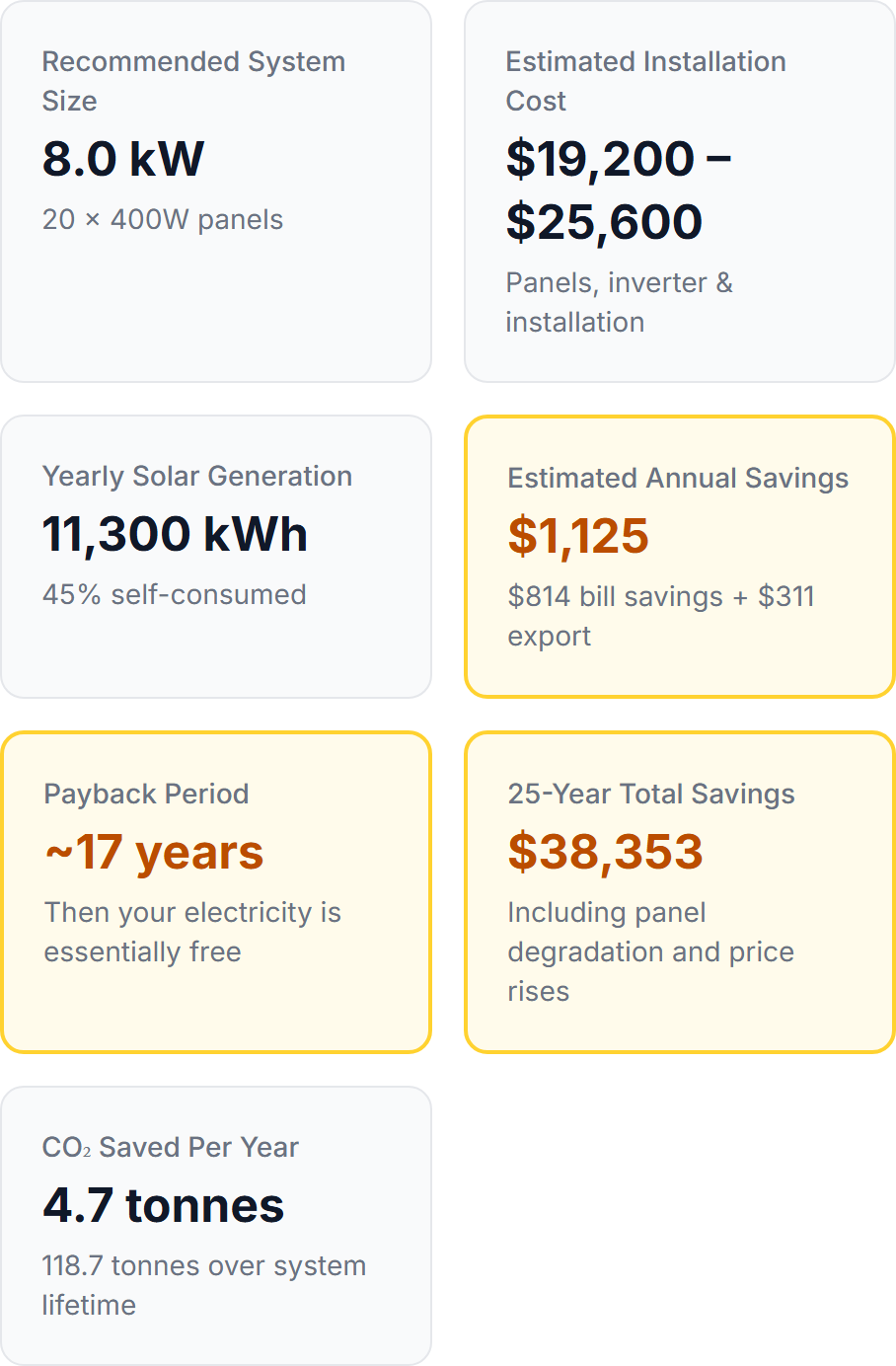
- 5–7 kW (average home, 3 bed): $12,000–$22,400. The most common residential range.
- 8–12 kW (large home, 4+ bed): $19,200–$38,400. For higher consumption or future EV charging.
Larger systems have a lower cost per kW because fixed costs like scaffolding, permits, and the inverter are spread across more panels.
What Affects Your Specific Price?
Two households on the same street can get quotes that differ by thousands. The main variables are:
- Roof complexity — multi-level roofs, dormers, or non-standard materials increase installation time.
- Panel brand — premium panels (SunPower, REC Alpha) cost more per watt than budget brands.
- Inverter choice — microinverters (Enphase) cost $1,000–$2,000 more than a single string inverter.
- Battery storage — adding a 10 kWh battery (Tesla Powerwall, BYD) adds $6,000–$12,000.
- Installer margins — always get at least three quotes. Pricing varies 10–25% between installers.
Is Solar Worth the Cost?
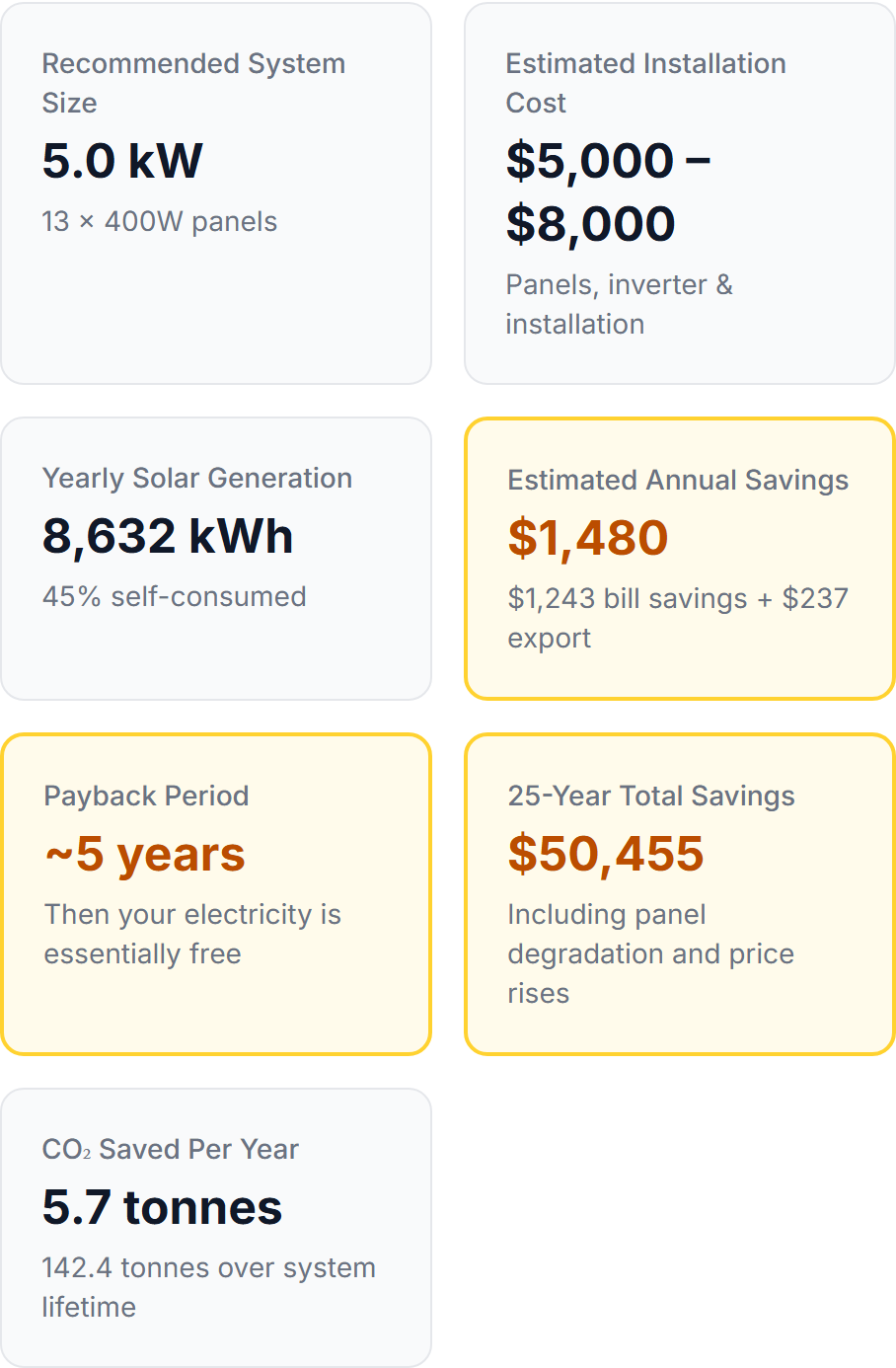
For most homeowners, yes — but the financial case depends on your electricity price, sun hours, and how much you self-consume. A well-sized system typically pays for itself in 5–9 years and then produces essentially free electricity for another 16–20 years.
Over 25 years, the average US homeowner saves $30,000–$60,000 compared to buying grid electricity, even accounting for panel degradation and maintenance. In Australia, where electricity prices are high and sun hours are generous, the returns are even stronger.
The fastest way to see whether the numbers work for your home is to use our solar estimator — enter your electricity bill and location and get a personalised cost, savings, and payback breakdown in seconds.
How to Reduce Your Solar System Cost
There are several practical ways to lower what you pay:
- Claim available incentives — the US 30% ITC, UK SEG payments, Australian STCs, and Irish SEAI grants can all reduce costs significantly.
- Get multiple quotes — the biggest single factor in what you pay is which installer you choose.
- Right-size your system — oversizing wastes money on panels that mostly export at low rates.
- Consider financing — solar loans let you go solar with no upfront cost, and monthly payments are often less than your current electricity bill.
- Time your purchase — some installers offer end-of-quarter discounts to hit sales targets.
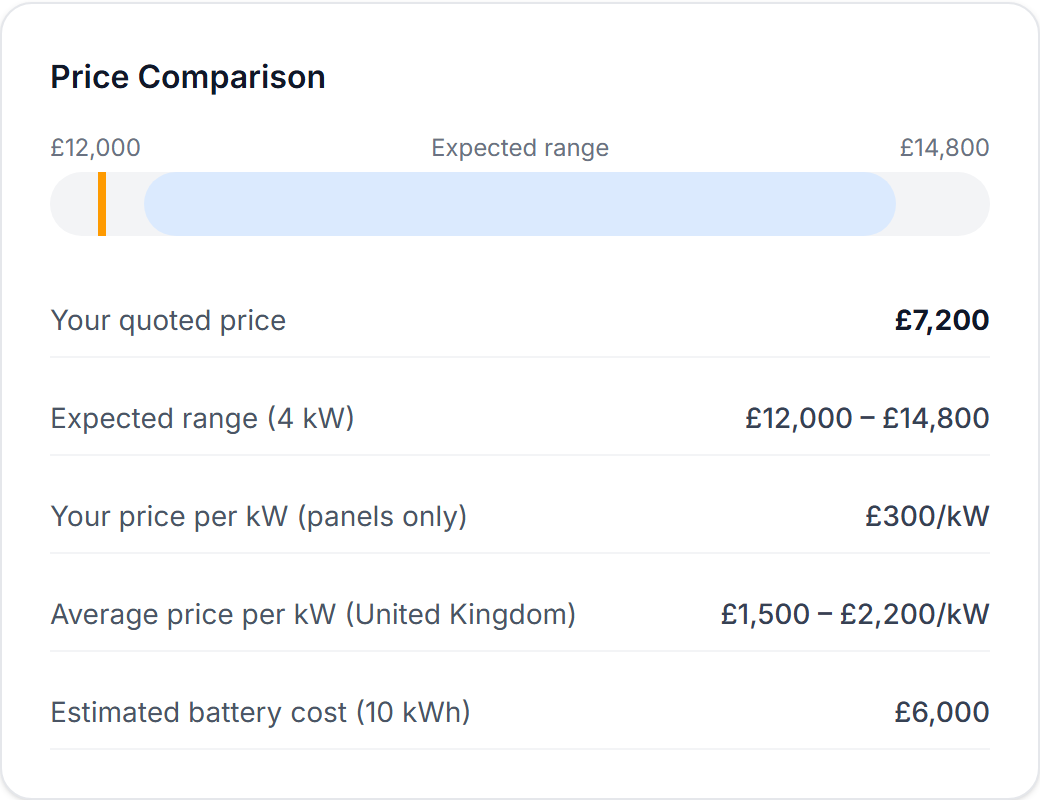
Already got a quote? Use our solar quote checker to see how it compares against average prices in your country.