How Solar Batteries Change the Economics
Without a battery, you typically use only 30–50% of the solar electricity you generate. The rest is exported to the grid at a lower rate. A battery can increase your self-consumption to 70–90%, meaning you buy less from the grid in the evening. The financial benefit depends on the gap between your retail electricity price and your export rate—the larger the gap, the more valuable a battery becomes.
How We Calculate Battery Value
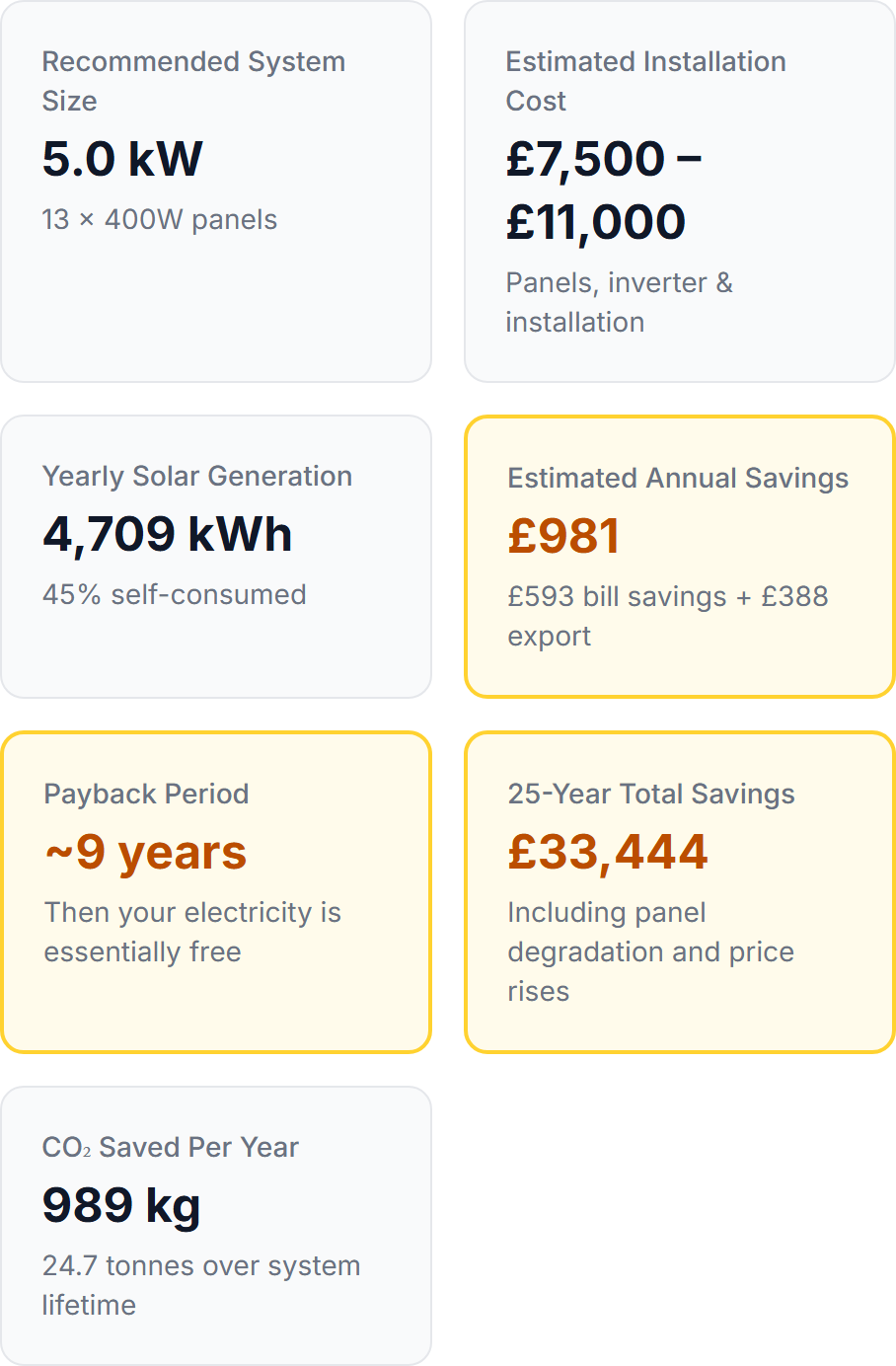
The calculator compares your savings with and without a battery. It estimates how much additional electricity you'd self-consume with storage, multiplies that by the difference between retail and export rates, and compares the extra savings to the battery cost. Battery lifespan (typically 10–15 years, with most warranted for 10) is factored in, as you may need to replace it once during your system's 25-year life.
When Batteries Make Sense (and When They Don't)
Batteries make the strongest financial case when: your export rate is very low (under 5c/kWh), your retail electricity rate is high (over 25c/kWh), you use most of your electricity in the evening, or you have time-of-use pricing with expensive peak rates. Batteries make less financial sense when: your export rate is generous (like the UK's Smart Export Guarantee rates above 15p/kWh), your electricity is relatively cheap, or you're home during the day and already self-consume most of your generation. That said, many homeowners value batteries for reasons beyond pure economics—backup power during outages and energy independence are common motivations.